Essence of RelationshipsEssence of RelationshipsEssence of RelationshipsEssence of Relationships
  • Inspirations from Sri Aurobindo
    • Bande Mataram
    • Essays Divine and Human
    • Essays on the Gita
    • Karmayogin
    • Letters on Yoga – I
    • Letters on Yoga – II
    • Letters on Yoga – III
    • Letters on Yoga – IV
    • Savitri
    • The Mother with Letters on The Mother
  • Inspirations from The Mother
    • Prayers and MeditationsA record of the Mother’s early spiritual life, from her diaries. Most entries are from 1912 to 1917
    • Questions and Answers 1929-1931Early conversations on various aspects of spiritual life; and commentaries on the Dhammapada
    • Questions and Answers 1953Conversations based on the Mother’s conversations of 1929.
    • Questions and Answers 1950-1951Conversations based on Sri Aurobindo’s book The Mother, the Mother’s essays on education and her conversations
    • Questions and Answers 1954Conversations based on the Mother’s essays on education and three small books by Sri Aurobindo: Elements of Yoga, Bases of Yoga and The Mother.
    • Questions and Answers 1955Conversations based on three works by Sri Aurobindo: Bases of Yoga, Lights on Yoga and The Synthesis of Yoga.
    • Questions and Answers 1957-1958Conversations based on three works by Sri Aurobindo: Thoughts and Glimpses, The Supramental Manifestation upon Earth and The Life Divine.
    • Some Answers from The MotherCorrespondence with fourteen sadhaks and students
    • Words of The Mother Vol. IShort written statements on Sri Aurobindo, herself, the Sri Aurobindo Ashram, Auroville, India and nations other than India; and a few conversations.
    • Words of The Mother Vol. IIIShort written statements on various aspects of spiritual life; and thirty conversations.
    • White Roses

Essence of Relationships

  • Home
  • Letters on Yoga - II
  • Essence of Relationships
Sri Aurobindo in early days
Doing something for the Lord
11/28/2017
Sri Aurobindo Wallpaper
Getting rid of desire
11/29/2017
Published by Sri Aurobindo on 11/28/2017
Categories
  • Letters on Yoga - II
Tags
  • Divine love
  • Human Relationships
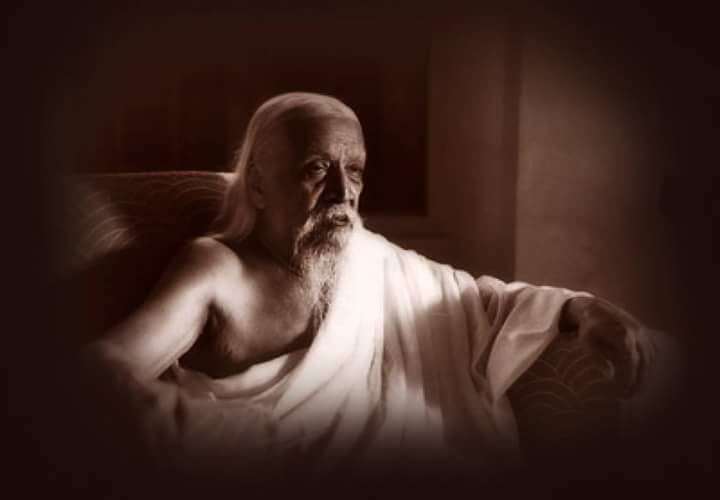
Sri Aurobindo in his room

The idea that all sadhaks must be aloof from each other and at daggers drawn is itself a preconceived idea that must be abandoned. Harmony and not strife is the law of yogic living. This preconceived idea arises perhaps from the old notion of Nirvana as the aim; but Nirvana is not the aim here. The aim here is fulfilment of the Divine in life and for that, union and solidarity are indispensable.
The ideal of the yoga is that all should be centred in and around the Divine and the life of the sadhaks must be founded on that firm foundation, their personal relations also should have the Divine for their centre. Moreover, all relations should pass from the vital to the spiritual basis with the vital only as a form and instrument of the spiritual – this means that, from whatever relations they have with each other, all jealousy, strife, hatred, aversion, rancour and other evil vital feelings should be abandoned, for they can be no part of the spiritual life. So, also, all egoistic love and attachment will have to disappear – the love that loves only for the ego’s sake and, as soon as the ego is hurt and dissatisfied, ceases to love or even cherishes rancour and hate. There must be a real living and lasting unity behind the love. It is understood of course that such things as sexual impurity must disappear also.


Absence of love and fellow-feeling is not necessary for nearness to the Divine; on the contrary, a sense of closeness and oneness with others is a part of the divine consciousness into which the sadhak enters by nearness to the Divine and the feeling of oneness with the Divine. An entire rejection of all relations is indeed the final aim of the Mayavadin, and in the ascetic yoga an entire loss of all relations of friendship and affection and attachment to the world and its living beings would be regarded as a promising sign of advance towards liberation, Moksha; but even there, I think, a feeling of oneness and unattached spiritual sympathy for all is at least a penultimate stage, like the compassion of the Buddhist, before the turning to Moksha or Nirvana. In this yoga the feeling of unity with others, love, universal joy and Ananda are an essential part of the liberation and perfection which are the aim of the sadhana.

Reference : Letters on Yoga Vol II

Share
0

Related posts

The Mother of Sri Aurobindo Ashram
10/27/2025

The faith which is needed…


Read more
The Mother
10/26/2025

Difficulty due to Relatives and Others


Read more
Sri Aurobindo in his room
10/25/2025

Compliments ? A great error of Human Vital


Read more
An offering at the lotus feet of Sri Aurobindo and The Mother by In Search of The Mother